How to measure for a Radiator Cover
Grab your tools:
- Tape measure: For capturing all things dimensional!
- Pencil and paper: To jot down those vital numbers.
- Book: This can help keep things accurate.
We understand that you may have questions or concerns during the process, so our team will be available to answer any questions and advise on the best covers for your needs. Whether you need help selecting the right colour or material or want to ensure that the cover provides adequate ventilation, we’re here to help.
To use our assisted measuring service, simply send us a clear photo of one of your radiators on WhatsApp.
Standing back when taking the picture is essential to see the surrounding space and any potential obstructions that may affect the positioning of the cabinet. Once we receive your photo, our team of experts will review it and guide you through how to measure your radiator accurately.
Measure the Radiator Width
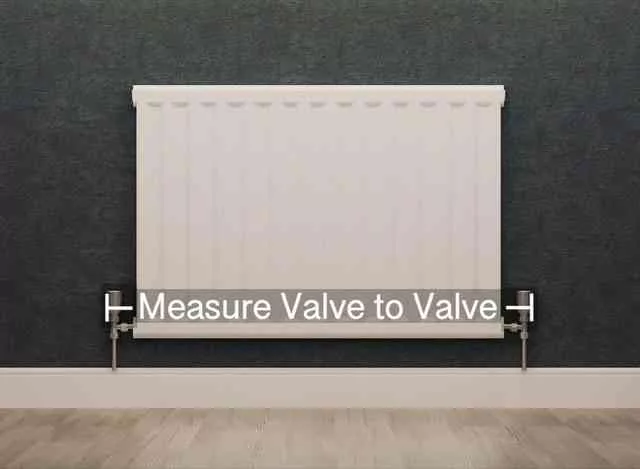
Step 1: First, record the width of your radiator – measure the distance from the valve on its left hand side, to the valve on its right hand side, and note down the measurement in either millimetres, centimetres or inches.
Measure Radiator Height
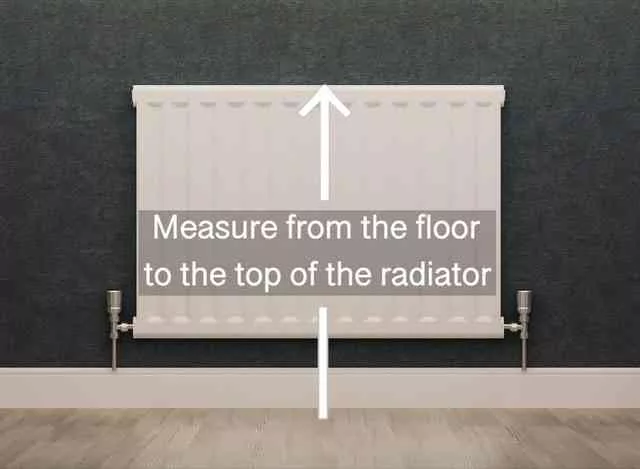
Step 2: Next, record the height – measure from the floor to the top of the radiator and note down the measurement (using the same unit of measurement as used for the width). For floating cabinet designs, instead of measuring from the floor you need to measure from either the bottom of the radiator panel or the top of your skirting board depending on which is nearest to the floor.
Measure Radiator Depth
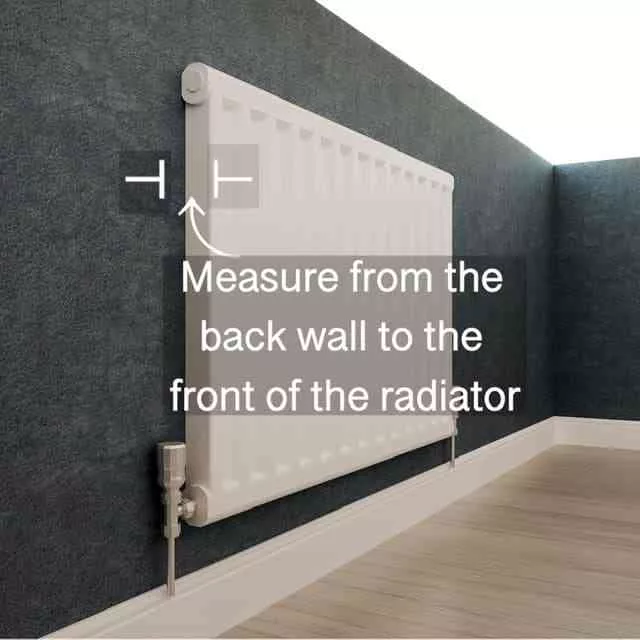
Step 3: Now, you need to record your radiator’s depth – measure from the wall to the front of the radiator and note the distance (again, in the same unit of measurement).
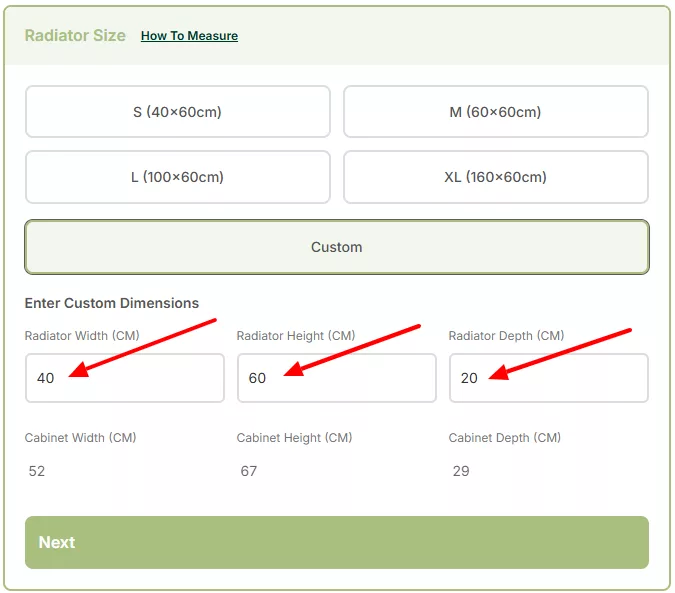
Step 4: Enter the recorded measurements into our website calculator on the product page of your chosen cabinet, and the calculator will automatically add on the recommended clearance (extra room to enable the cabinet to fit) onto the width, height and depth. This will accommodate the overhang of the top, thickness of the grille and front panel, as well as a recommended air gap.